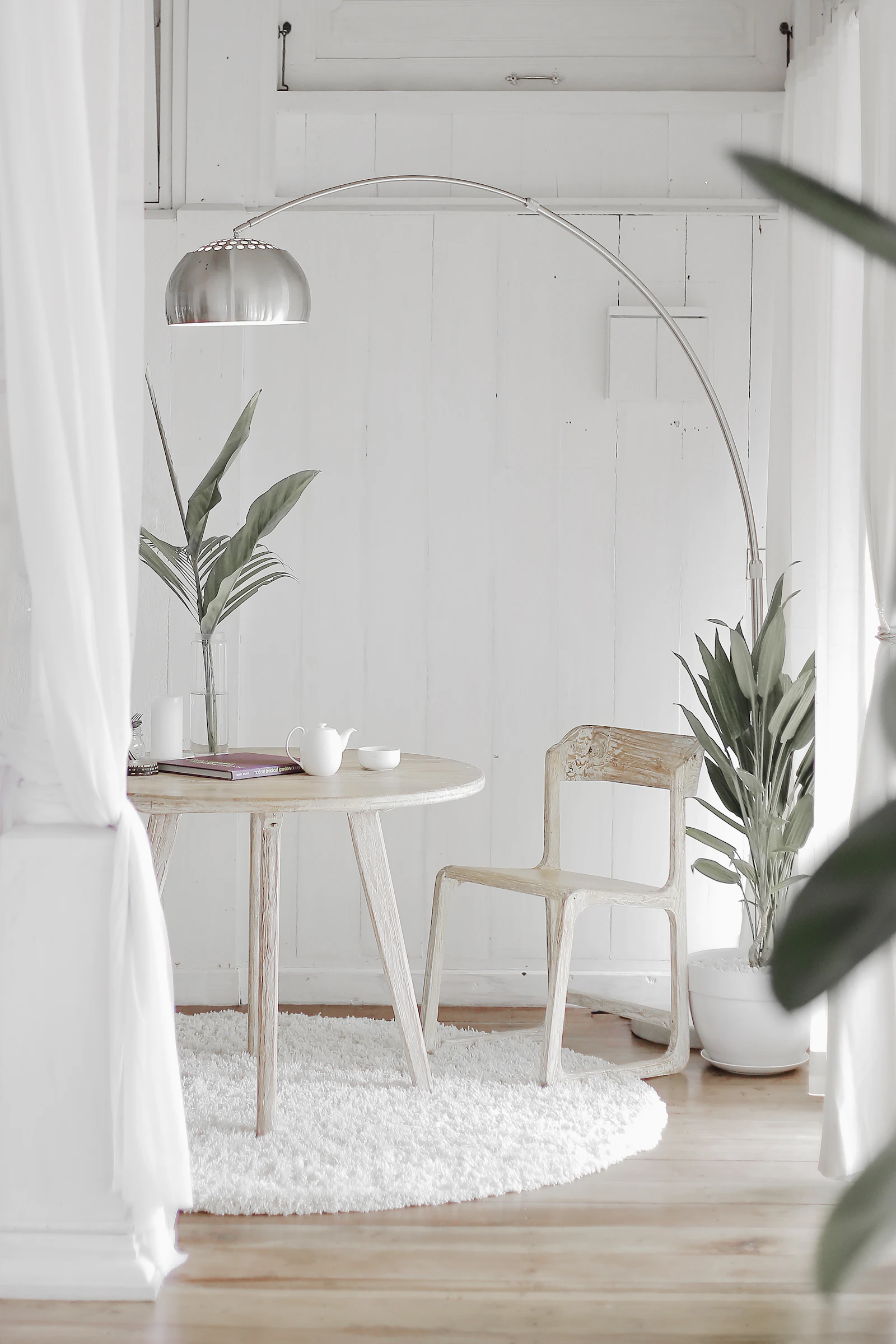
Give the table one main role.
A side table can hold a lamp, a book, a drink, or a small tray. When it tries to hold every object in the room, it stops feeling useful.
Leave space for a real cup.
A side table that cannot hold a cup, phone, or pair of glasses may look finished but fail in daily life. Leave one practical open spot.
Use height carefully.
Tall lamps, stacked books, and vases can crowd a small table quickly. A softer edit usually keeps one taller object and lets the rest stay low.
Let the nearby seat guide the table.
The table should support the chair or sofa beside it. If someone cannot reach it easily, the table is decoration rather than part of the room.
Group small objects with a tray.
A tray can help small items feel intentional, but it should not become a container for every loose object. Keep the group narrow and useful.
Balance hard and soft details.
Wood, glass, ceramic, metal, books, fabric, and plants all bring different feelings. A table works best when it does not feel like one material repeated too loudly.
Reset the table without clearing it completely.
A table can stay lived in. The reset is not about removing everything, but about returning the surface to a shape that makes sense.
