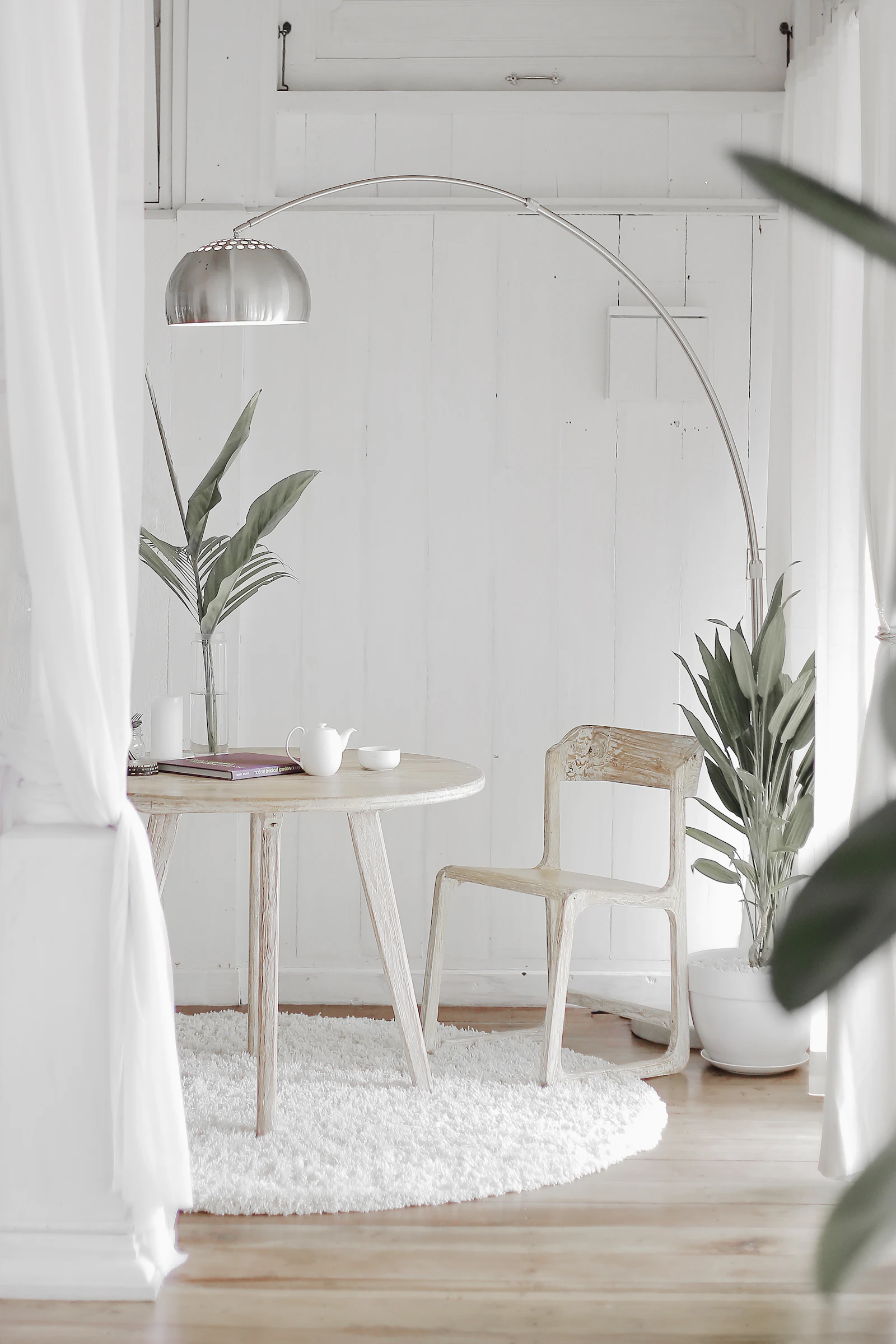
Use low light for quiet corners.
A ceiling light fills a room, but a lower lamp gives one corner a reason to exist. A small pool of light beside a chair or table can make the room feel more personal.
Let window light choose the best surface.
A table, shelf, or chair near natural light often becomes the softest part of the room. Notice where light lands before deciding where objects should go.
Keep evening light gentle.
Evening rooms often feel better with fewer bright sources. A lamp, warm bulb, or shaded light can make the transition from day to night less abrupt.
Avoid lighting every corner equally.
A room with every area lit the same way can feel flat. Small differences between bright, soft, and shaded areas give a room more depth.
Use lamps as room anchors.
A lamp does more than provide light. It can define a reading corner, soften a side table, or make a plain wall feel intentional.
Notice reflection and glare.
Glass, mirrors, glossy tables, and screens can make light feel sharper than intended. A softer room often benefits from placing bright sources away from reflective surfaces.
Let darkness remain somewhere.
A soft room does not need to remove every shadow. A little shadow can make the lit areas feel warmer and more grounded.